How to Design a Balanced Diet Chart for Women (Indian Meal Plan)
A balanced diet is not about eating less or following strict food rules. For women, especially in India, it is about eating the right foods in the right portions at the right time. Women’s bodies go through multiple stages, such as menstruation, pregnancy, motherhood, and menopause, which directly affect nutritional needs.
This guide explains how to design a balanced diet chart for women using Indian foods, keeping health, energy, weight management, and long-term wellness in focus. Whether you are a working woman, homemaker, or student, this Indian meal plan is practical, realistic, and easy to follow.
What Is a Balanced Diet Chart for Women?
A balanced diet chart for women is a daily food plan that provides all essential nutrients required for the body to function properly. It includes the correct proportion of carbohydrates, proteins, fats, vitamins, minerals, fiber, and water. The goal is not calorie cutting but nutritional balance.
For Indian women, a balanced diet also respects traditional eating habits such as roti, rice, dal, sabzi, curd, and seasonal fruits. When meals are balanced, women experience better energy levels, improved digestion, hormonal balance, stronger immunity, and healthy weight management. A proper diet chart ensures consistency rather than short-term results.
Why Indian Women Need a Specially Designed Diet Plan
Indian women often face nutritional gaps due to busy lifestyles, meal skipping, and low protein intake. Iron deficiency, calcium loss, vitamin D deficiency, and hormonal imbalance are common concerns. A generic diet plan may not address these issues.
A well-designed Indian balanced diet plan for women considers local foods, cooking methods, climate, and lifestyle patterns. It supports reproductive health, bone strength, metabolism, and mental well-being. Women also have different calorie needs than men, making personalized diet planning essential for long-term health and disease prevention.
Essential Nutrients Required in a Balanced Diet for Women
Women need both macronutrients and micronutrients daily. Carbohydrates provide energy and should come from whole grains like roti, brown rice, and millets. Proteins are crucial for muscle strength, metabolism, and hormonal balance and should come from dal, paneer, curd, eggs, or lean meats.
Healthy fats support brain and hormone health and can be sourced from nuts, seeds, ghee, and oils in moderation. Micronutrients such as iron, calcium, folate, vitamin B12, and vitamin D are especially important for women. A balanced Indian meal plan naturally meets these needs when planned carefully.
Daily Calorie Requirement for Indian Women
The calorie requirement for women depends on age, body composition, and activity level. A sedentary woman may need around 1,800 calories per day, while moderately active women require about 2,000 calories. Highly active women may need up to 2,200 calories.
Instead of focusing only on calories, the quality of food matters more. Balanced meals spread across the day help maintain blood sugar levels, prevent overeating, and support metabolism. Proper calorie distribution through meals and snacks is key to designing a sustainable diet chart for women.
How to Design a Balanced Diet Chart for Women Step by Step
Designing a balanced diet chart starts with identifying health goals such as weight management, energy improvement, or hormonal balance. Meals should be divided into five to six small portions throughout the day to maintain energy and digestion.
Each meal must include a combination of carbohydrates, protein, fiber, and healthy fats. Portion control is essential, especially for rice, roti, and fats. Hydration should not be ignored, as water plays a vital role in digestion and detoxification. Consistency matters more than perfection in diet planning.
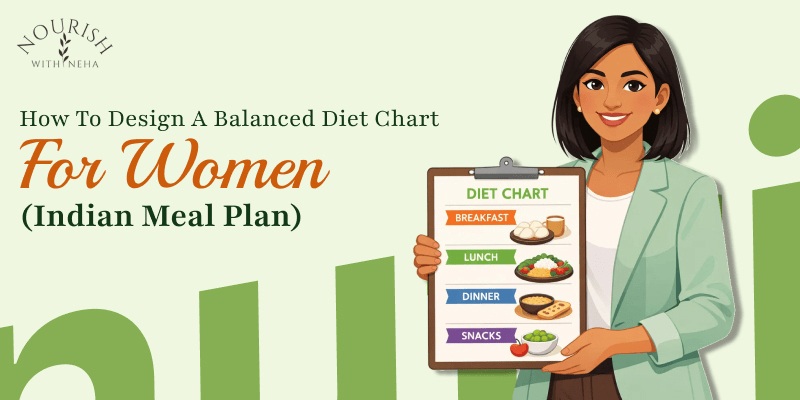
Balanced Diet Chart for Women (Indian Daily Meal Plan)
The following balanced diet chart is designed for Indian women to meet daily nutritional needs, maintain energy levels, support hormonal balance, and promote overall well-being. It includes easily available Indian foods and can be adjusted based on age, lifestyle, and health goals.
Daily Balanced Diet Chart for Women
|
Meal Timing |
Food Options (Indian Diet) |
Nutrition Purpose |
|
Early Morning |
Warm water / jeera water + 4–5 soaked almonds |
Hydration, digestion, metabolism |
|
Breakfast |
Vegetable poha / oats / idli with sambar / paratha with curd |
Energy, protein, fiber |
|
Mid-Morning Snack |
1 seasonal fruit (apple, papaya, orange) or coconut water |
Vitamins, hydration |
|
Lunch |
2 rotis or 1 cup rice + dal/rajma/chole + vegetable sabzi + salad + curd |
Balanced macros, satiety |
|
Evening Snack |
Roasted chana / sprouts chaat / fruit with nuts |
Protein, hunger control |
|
Dinner |
1–2 rotis or vegetable khichdi + sabzi + paneer/tofu/egg curry |
Light, protein-rich meal |
|
Before Bed (Optional) |
Haldi milk / plain warm milk |
Bone health, better sleep |
How This Balanced Diet Chart Helps Women
This Indian meal plan ensures:
- Adequate protein intake for muscle and hormonal health
- Balanced carbohydrates for sustained energy
- Healthy fats for brain and hormone function
- Sufficient fiber for digestion and gut health
The meals are spaced evenly to prevent energy crashes, cravings, and overeating. This diet chart supports weight management, immunity, and long-term health without extreme food restrictions.
7-Day Balanced Diet Meal Plan for Indian Women
A weekly meal plan helps maintain variety and prevents boredom. Rotating vegetables, grains, and protein sources ensures complete nutrition. Including millets like ragi and jowar improves fiber intake and gut health.
Indian home-cooked meals are sufficient when balanced properly. Planning meals in advance reduces dependency on processed foods and improves dietary consistency. A 7-day Indian diet plan supports long-term adherence and makes healthy eating practical for women of all age groups.
Balanced Diet Chart for Women Based on Health Goals
Women may have different dietary needs depending on health conditions. A balanced diet for weight loss focuses on protein, fiber, and controlled portions. For PCOS, low glycemic foods and regular meal timing are essential.
Women with thyroid issues need adequate selenium, iodine, and protein. During pregnancy, nutrient requirements increase, especially for iron, calcium, and folate. A personalized Indian diet plan helps manage these conditions naturally and safely without extreme food restrictions.
Best Indian Foods to Include in a Balanced Diet for Women
Whole grains like wheat, rice, and millets provide sustained energy. Pulses and legumes are excellent plant-based protein sources. Dairy products such as curd and paneer support calcium intake and gut health.
Seasonal fruits and vegetables provide antioxidants, vitamins, and fiber. Nuts and seeds supply healthy fats and minerals essential for hormonal balance. Including traditional Indian foods ensures both nutritional adequacy and cultural comfort.
Common Diet Mistakes Women Should Avoid
Skipping meals is one of the most common mistakes and leads to low energy and overeating later. Extreme calorie restriction slows metabolism and affects hormonal health. Many women also consume insufficient protein, which impacts muscle mass and immunity.
Over-reliance on packaged and processed foods reduces nutrient quality. Ignoring hydration affects digestion and skin health. A balanced diet should be sustainable, flexible, and nourishing rather than restrictive or trend-driven.
Practical Tips to Maintain a Balanced Diet Daily
Meal planning and simple food preparation help maintain consistency. Eating home-cooked meals most of the time improves nutritional quality. Listening to hunger and fullness cues prevents overeating.
Staying physically active complements a balanced diet and improves overall well-being. Drinking adequate water, sleeping well, and managing stress are equally important. A balanced diet works best when combined with a balanced lifestyle.
Conclusion
Designing a balanced diet chart for women does not require expensive foods or strict rules. Using Indian meals wisely, understanding portion sizes, and maintaining consistency can improve health naturally. A balanced Indian meal plan supports energy, hormonal health, weight management, and long-term wellness for women at every stage of life.
Book Your Consultation Today
If you want a personalized balanced diet chart designed for your body, lifestyle, and health goals, connect with Nourish With Neha, led by Neha Batra. Get expert nutrition guidance that is practical and sustainable. Call Now: +91-9168812709
FAQs About Balanced Diet Chart for Women
1. What is a balanced diet chart for women in India?
A balanced diet chart for women in India includes roti or rice, dal, vegetables, fruits, dairy, healthy fats, and adequate protein. It focuses on portion control, meal timing, and nutrient balance using Indian foods.
2. How many calories should an Indian woman eat daily?
Most Indian women need between 1,800 and 2,200 calories daily, depending on age and activity level. The focus should be on nutrient-dense foods rather than calorie counting alone.
3. Can a balanced diet help women lose weight?
Yes, a balanced diet supports healthy weight loss by improving metabolism, controlling hunger, and preventing nutrient deficiencies. Sustainable weight loss comes from balanced meals, not extreme dieting.
4. Is rice allowed in a balanced diet for women?
Yes, rice can be included in moderation. Pairing rice with dal, vegetables, and protein ensures blood sugar balance and sustained energy.
5. What protein sources are best for Indian women?
Dal, paneer, curd, milk, eggs, soy, sprouts, and nuts are excellent protein sources suitable for Indian women following vegetarian or non-vegetarian diets.
6. How important is protein in a woman’s diet?
Protein supports muscle strength, hormonal balance, metabolism, and immunity. Many Indian women consume less protein than required, making it essential to include protein in every meal.
7. What is the best breakfast for women?
A balanced breakfast includes complex carbohydrates, protein, and fiber. Options like vegetable poha, oats, paratha with curd, or eggs provide long-lasting energy.
8. Can working women follow a balanced Indian diet?
Yes, with simple meal planning and easy recipes, working women can maintain a balanced diet using home-cooked or packed meals.
9. Is a balanced diet helpful for PCOS?
A balanced diet with low-GI foods, adequate protein, and regular meal timing helps manage PCOS symptoms and supports hormonal balance.
10. How does hydration affect women’s health?
Proper hydration improves digestion, skin health, metabolism, and energy levels. Women should drink adequate water throughout the day.
11. Are millets good for women’s nutrition?
Yes, millets like ragi and jowar are rich in fiber, calcium, and minerals, making them excellent for women’s bone and gut health.
12. Should women follow crash diets?
Crash diets are harmful and unsustainable. A balanced diet supports long-term health, steady weight management, and nutritional adequacy.